Introduction: SEO On Page and Off Page
SEO On-Page and Off-Page Optimization: A Complete Certified Guide Introduction: SEO On Page and Off Page are the two main parts of search engine optimization that decide how well a website ranks on search engines like Google. In today’s crowded digital landscape, simply creating a website is not enough; it must be optimized both internally and externally to gain visibility, traffic, and conversions.
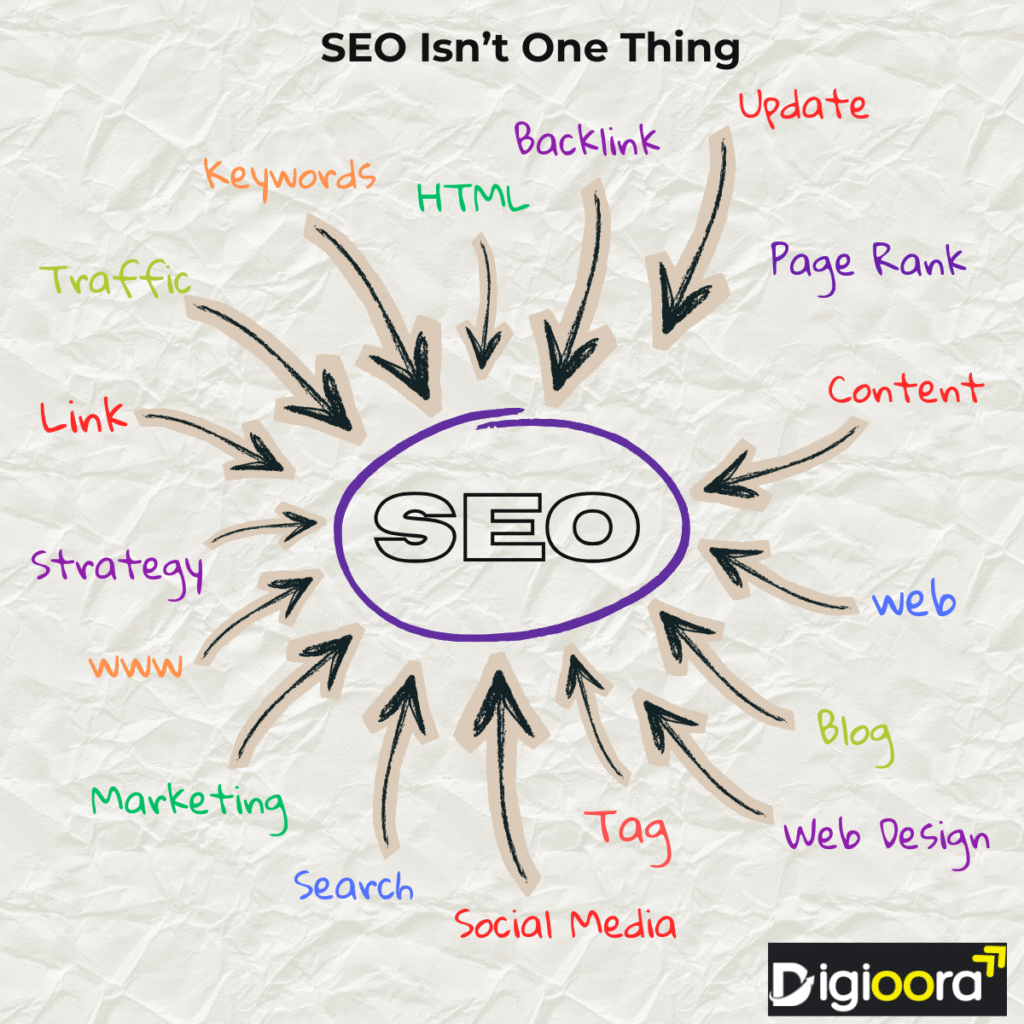
SEO On-page and off-page work together to improve a website’s relevance, authority, and trust with search engines. On-page SEO focuses on improving elements within the website itself, such as content quality, keyword use, meta tags, URLs, internal links, and user experience. These factors help search engines understand a page’s content and its value for users. Off-page SEO, meanwhile, includes activities outside the website, such as link building, brand mentions, social signals, and managing online reputation.
These external signals show a website’s credibility and popularity across the web. When used effectively, SEO On Page and Off Page lead to sustainable growth, higher search rankings, and long-term success online. A balanced approach to both is crucial for businesses, bloggers, and digital marketers who want to create a strong and trusted online presence.
What is on page SEO?
On-page SEO is a core part of SEO On-Page and Off-Page involves optimizing each web page. This includes improving content quality, keyword placement, meta tags, headings, URLs, internal linking, and the overall user experience. These changes help search engines understand the page better and rank it higher in search results.
some SEO on page best practices
1.Optimize the title tag, meta description, and H1 with the main keyword.
2. Create high-quality content that focuses on search intent.
3. Use SEO-friendly URLs and a proper heading structure.
4. Implement relevant internal links.
5. Improve page speed, mobile friendliness, and user experience.
WHAT IS ON PAGE CONTENT?
On-page SEO is the practice of improving web pages to boost search engine rankings. It involves using keywords carefully in content, titles, headings, URLs, and meta tags. This also improves user experience, readability, and page performance for better visibility and engagement.
Difference Between SEO On-Page and Off-Page
The difference between SEO on-page and off-page lies in where the optimization occurs and what it targets. On-page SEO focuses on improving elements within the website. This includes content, keywords, meta tags, headings, URLs, internal links, images, and user experience. Its goal is to improve relevance and crawlability. Off-page SEO, in contrast, involves activities outside the website. These include backlinks, brand mentions, social signals, and online reputation. Off-page SEO helps build authority and trust. On-page SEO is entirely under the website owner’s control and acts as the foundation of SEO. Off-page SEO is only partially controllable and improves rankings through external vaClidation.
- There are some important elements in on-page SEO
On-page SEO elements plays important role in SEO On-Page and Off-Page are the factors on a website that can be improved to boost search engine rankings and enhance user experience. The main on-page SEO elements are:
- Title tag:- The title tag is an HTML element that sets the title of a webpage. It shows up in search engine results as the main clickable headline.
- Meta Description:- The meta description is a brief HTML summary of a webpage. It helps users and search engines grasp the page’s content. It also influences the click-through rate.
- URL Structure:- URL structure refers to how a webpage’s URL is formatted and organized. It should be short, easy to read, and contain relevant keywords.
- Heading Tags (H1–H6):- Heading tags (H1, H2, H3, H4, H5, H6) are HTML elements that organize content in a clear way. This structure makes it easier to read and helps search engines understand the content better.
- Keyword Optimization:- Keyword optimization is the careful placement of relevant keywords in content and HTML elements. This helps improve search engine rankings without using too many keywords.
- Internal Linking:- Internal linking means connecting one page to another on the same website using a link.
- Image Optimization:- Image optimization involves compressing images, using clear filenames, and adding alt text. This improves page speed and accessibility.
- User Experience (UX):- User experience (UX) refers to how easily and effectively users engage with a website. This covers design, speed, and usability.
- Schema Markup:- Schema markup is structured data that is added to webpages. It helps search engines understand content and display rich results.
- Importance of on-page SEO
On-page SEO is important in SEO On-Page and Off-Page because it helps search engines understand a website’s content and relevance. This understanding directly affects search rankings. By optimizing elements like content, keywords, headings, meta tags, URLs, and internal links, on-page SEO improves how well the site can be crawled and indexed. It also enhances the user experience by making pages easier to read, faster, and mobile-friendly. This improvement in quality leads to higher engagement and lowers the bounce rate. Strong on-page SEO builds the foundation for overall SEO success and ensures that off-page efforts, such as link building, achieve the best results.
- How to Do On-Page SEO..? (h3)
A Step-by-Step Optimization Guide:-
To do on-page SEO effectively, start with keyword research. Identify a clear primary keyword and include related secondary and LSI keywords based on search intent. Optimize the title tag by placing the primary keyword naturally and keeping it within the recommended length. Write a compelling meta description that encourages clicks. Create high-quality, original content that directly answers the user’s query. Use the focused keyword in the H1 heading. Structure the content with H2 and H3 subheadings for clarity and readability. Place keywords naturally in the first 100 words and throughout the content without overusing them. Optimize the URL structure by keeping it short, descriptive, and rich in keywords. Add internal links to relevant pages with meaningful anchor text to improve navigation and crawlability. Optimize images by compressing them. Use descriptive file names and add ALT text. Finally, improve page speed, ensure mobile responsiveness, and focus on overall user experience. Regularly update and refresh content to maintain relevance and rankings.
1.Keyword Research
Identify a main keyword, along with secondary and related keywords, based on what users are searching for. Assign one main keyword to each page to prevent keyword cannibalization.
2.Title and Meta Optimization
Optimize the title tag by using the main keyword. Write a clear and engaging meta description to boost the click-through rate.
3.Content Optimization
Create high-quality, original content that meets search intent. Use keywords naturally and focus on offering value to users.
4.Heading Structure
Use one H1 tag and organize content with H2 and H3 headings. This will improve readability of SEO On-Page and Off-Page
5.URL Optimization
Keep URLs short, clear, and full of keywords for better indexing and user understanding. Etc. (Internal Linking, Image Optimization, Page Speed and Mobile SEO, User Experience
Pros of on page SEO (h3)
1. Full control-You manage all elements, including content, meta tags, headings, and URLs.
2.Improved Rankings – Optimizing pages helps search engines understand relevance better and rank them higher.
3.Better User Experience – Improves readability, navigation, page speed, and mobile usability.
4.Cost-Effective – It takes effort and planning instead of paid promotions.
5.Foundation for SEO Success – Forms the foundation for all off-page SEO activities to function effectively.
- Cons of on page SEO (h3)
1.Time-Consuming- Requires careful planning, research on keywords, creating content, and improving it.
2.Continuous Effort Needed– Content and optimization must be updated often to stay competitive.
3.Limited Without Off-Page SEO– Even well-optimized pages might not rank highly without backlinks and authority signals.
4.Technical Challenges- Improving speed, mobile responsiveness, and structured data may need technical skills.
5.Over-Optimization Risk- Using too many keywords or optimizing incorrectly can result in penalties from search engines.
FAQ about on-page SEO..?
What is on-page?
It is important part of SEO On-Page and Off-Page because the practice of optimising a website’s content, keywords, meta tags, headers, URLs, and pictures to assist search engines comprehend the page and rank it for pertinent search queries is known as on-page SEO.
Why it is Important?
Because it enhances user experience and content relevancy, SEO On-Page and Off-Page helps search engines correctly crawl, index, and rank web pages, which has a direct influence on organic traffic and exposure.
2. What is off page SEO?
Off-Page SEO involves all the activities done outside your website to boost its authority, trust, and search engine rankings. Unlike on-page SEO, which concentrates on content and technical aspects of the site, off-page SEO signals assist search engines in assessing how credible and popular your website is throughout the internet. it is very important component of SEO On-Page and Off-Page.
The goal of off-page SEO is to boost a website’s authority, trust, and search engine rankings. This is done by building strong external signals outside the website, like backlinks and brand mentions.
Importance of off-page SEO ?
Off-page SEO create strength of SEO On-Page and Off-Page because it helps search engines assess a website’s authority, trustworthiness, and popularity beyond its content. Through external signals like quality backlinks, brand mentions, and online reputation, off-page SEO demonstrates that other websites and users value and recommend the site. These signals significantly impact search engine rankings, boost referral traffic, and build long-term brand credibility. Without strong off-page SEO, even well-optimized websites may have difficulty ranking competitively in search results.
Conclusion Says:-
Off-page SEO improves a website’s authority, trust, and credibility. This boosts E-E-A-T (Experience, Expertise, Authoritativeness, and Trustworthiness) for a better search engine rank.
Difference between SEO On-Page and Off-Page
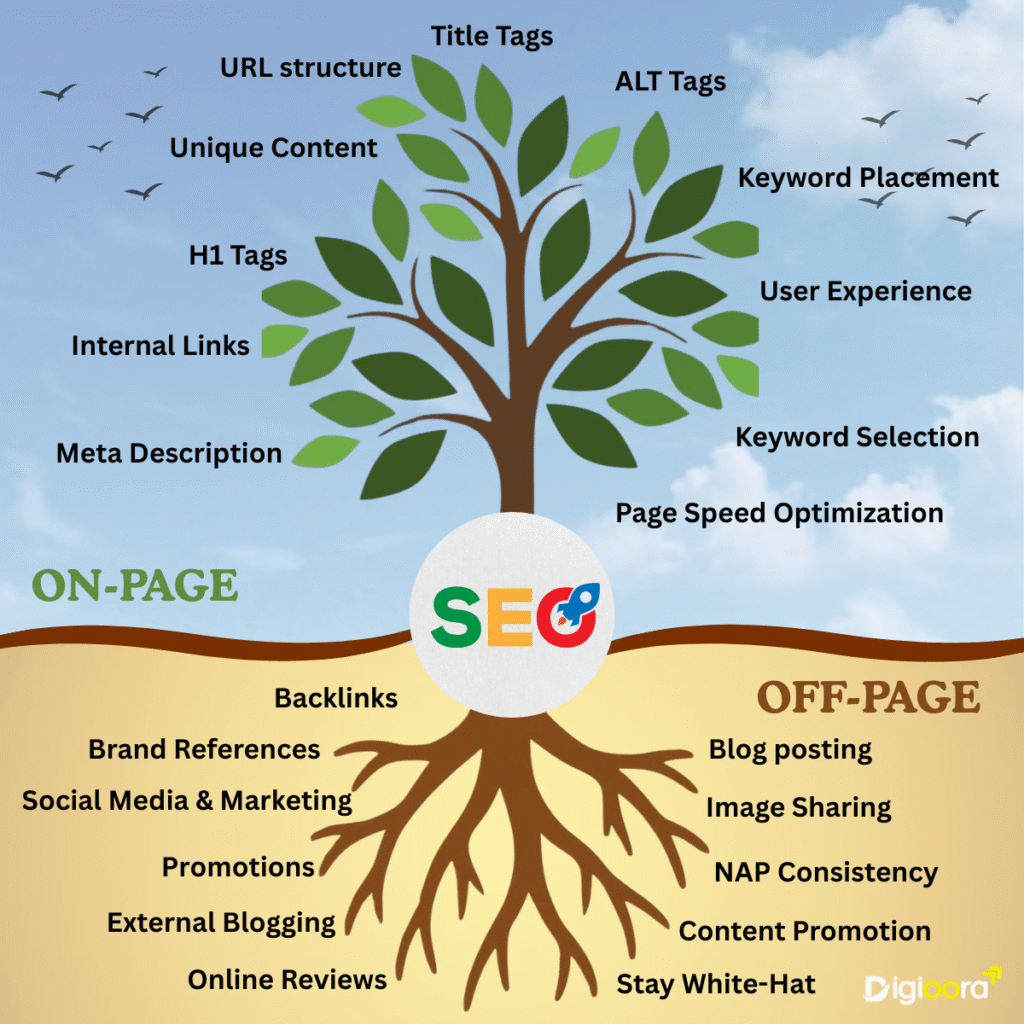
On-page SEO focuses on improving elements within your website to make it friendly for both search engines and users. This includes optimizing content, meta tags, headings, URL structure, images, and internal links. Website owners have full control over on-page SEO. This practice ensures that search engines can easily crawl, index, and understand the website’s content, which boosts relevance and usability.
Off-page SEO includes activities that take place outside the website to build authority, trust, and credibility. This involves getting high-quality backlinks, earning brand mentions, using social signals, and managing online reputation. Off-page SEO boosts the website’s authority with search engines, increases referral traffic, and helps the site rank higher in search results. Along with on-page SEO, it forms a complete SEO strategy that improves visibility, trust, and overall performance.
Best top 5 Off-Page SEO Techniques:-
1.High-Quality Backlink Building:-
High-quality backlink is very important in SEO On-Page and Off-Page backlink building means earning links from trusted and relevant websites to your own site. This demonstrates credibility to search engines. These backlinks boost domain authority, page authority, and search rankings by acting as votes of confidence for your content. Effective backlinks come from sites in your niche, use natural and relevant anchor text, and fit seamlessly within the content rather than appearing in footers or sidebars. Common strategies include guest posting, broken link building, the skyscraper technique, resource page link building, and digital PR. High-quality backlinks not only improve rankings but also attract targeted referral traffic and build overall online credibility.
2.Brand Mentions & NAP (Name, Address, phone) Listing
Brand Mentions A brand mention refers to when your business, brand name, or website is cited on another website, blog, news site, or social platform. These mentions can be linked or unlinked. They signal to search engines that your brand is trusted, authoritative, and relevant. Brand mentions also help improve your site’s E-E-A-T (Experience, Expertise, Authoritativeness, Trustworthiness), which can raise your rankings. Example: Your SEO website is mentioned in a popular marketing blog. Even without a backlink, search engines see your brand as credible. Brand mention also create authority in SEO On-Page and Off-Page
Example: Your SEO website is mentioned in a popular marketing blog. Even without a backlink, search engines see your brand as credible.
NAP Listings NAP stands for Name, Address, and Phone number. NAP listings require your business information to be consistent across all online directories and local listings. This consistency is important for local SEO. It helps search engines verify your business and rank it higher in local search results and Google Maps.
Example: A local café that has the same NAP details on Google Business, Yelp, and Trip Advisor improves its chances of showing up in “near me” searches.
3.Social Media Signals are interactions like likes, shares, comments, and mentions of your content or brand on platforms such as Facebook, LinkedIn, X (Twitter), Instagram, and Pinterest. Although most social links are no follow, these signals improve content visibility, drive referral traffic, and indirectly enhance SEO by indicating to search engines that your brand is active and engaging online.
Example: sharing a blog post on LinkedIn that gets widely shared and discussed shows popularity and relevance, helping search engines recognize your content.
4. Influencer Outreach and Digital PR focus on working with industry influencers, bloggers, or media outlets to promote your content, products, or services. This approach helps you gain valuable backlinks, brand mentions, and greater visibility. As a result, your website’s trust and credibility grow in the eyes of search engines.
Example: A leading marketing influencer reviews your SEO tool on their blog or social media, linking to your website and boosting both referral traffic and domain authority.
5. Online reviews and reputation management aim to create a good image for your brand on review sites, directories, and social media. Positive reviews and ratings build trust and credibility, particularly for local businesses, and help search engines rank your site higher in local search results. Keeping an eye on reviews and responding to them also improves customer relationships and strengthens overall brand authority.
Example: A local restaurant gets regular 5-star reviews on Google Business and Yelp. This boosts its visibility in searches for “best restaurant near me” and builds customer trust.
- How it is different from on-page :- (h2)
Off-page SEO differs from on-page SEO in terms of the location of the setup and the desired outcome. For instance, on-page SEO aims to make a website easier for search engines to crawl and rank by optimising a number of elements, including content quality, keyword use, meta tags, headers, and URLs. While off-page SEO enhances authority, trust, and credentials—all of which eventually aid search engines in determining a website’s worth and dependability in comparison to rivals—on-page SEO enhances relevance and usability.
In Conclusion:-
On-page SEO helps search engines understand and rank your content. Off-page SEO helps search engines trust and validate your website.
Outcome:
A site with good on-page SEO and poor off-page SEO will struggle to rank competitively, whereas good off-page SEO and poor on-page optimization will not turn rankings into a high degree. When combined, on-page SEO launch relevance and usability; off-page SEO builds authority and trust for sustainable, long-term search engine performance.
- How to do off-page SEO (h3)
SEO off-page optimization is the term used to describe the entire set of actions taken from outside the site itself to increase its credibility and ranking within the search engine algorithms. Essentially, the techniques are mostly applied to the building of quality links, mentioning of the brand, and social signals. Good SEO can help the search engines assess the level of credibility and popularity of the site, which is used as the deciding factor affecting the level of ranking of the site mentioned in search engine optimization. Through the acquisition of natural links and social presence, the domain authority is increased, and the traffic also gets boosted.
- Backlinks:
Backlinks differ in the sense that they are links on other people’s sites that link back to your site. For efficient off-page search engine optimization, it is important to note that it is more effective to create high-quality backlinks than numerous poor-quality backlinks.
- Social Media & Marketing
Social Media and Influencer Marketing is a subsidiary off-page SEO strategy for increasing brand visibility, trust, and authority by sharing content through social platforms and industry influencers. It helps to increase referral traffic, generates brand mentions and backlinks, and supports E-E-A-T with the indirect purpose of associating it with higher search engine rankings.
- Content Marketing
Content Marketing is an off-page SEO method focused on creating and promoting valuable, relevant, and high-quality content to attract attention, gain backlinks, and elicit brand mentions from external websites. Distribution of content such as blogs, guides, videos, and infographics across blogs, social platforms, forums, and media sites helps in increasing visibility, building authority, and supporting long-term search engine rankings.
- Heading Tags
Heading Tags (H1 to H6) Heading Tags are SEO techniques to organize webpage content and outline its hierarchy for viewing by humans as well as search engines. Applying SEO heading tags to websites ensures search engines can easily comprehend the title and subtopics of a webpage, increasing relevance to keywords and making it readable. An optimized heading tag for H1 acts as the title of the webpage, whereas H2 to H6 heading tags organize supporting subtopics.
- Image Alt Tag and URL
Structure are considered key components in on-page SEO optimization, and they assist search engines in comprehending and processing web page data more efficiently. An image alt tag is used to describe an image on a web page, making it more accessible to web page visitors and search engines, which is crucial for image search engine rankings and web page SEO optimization. URL structure refers to how a web page address looks in a web browser, and an optimal URL structure is essential in assisting web page visitors and search 3wengines in understanding web page content.
FAQ about off-page SEO..?
1.What part does off-page SEO play in both SEO on-page and off-page?
In SEO, off-page Building authority, trust, and credibility through backlinks, brand mentions, social signals, and online reputation is the main goal of both on-page and off-page optimisation. This helps search engines verify the relevance produced by on-page SEO.
2. What distinguishes an off-page SEO approach from an on-page SEO strategy?
In SEO On-Page and Off-Page strategy, off-page SEO is crucial since it enhances ranks, referral traffic, and long-term organic exposure by fortifying a website’s credibility and trust through external signals.
There are various tools available that assist you in optimizing your blog.
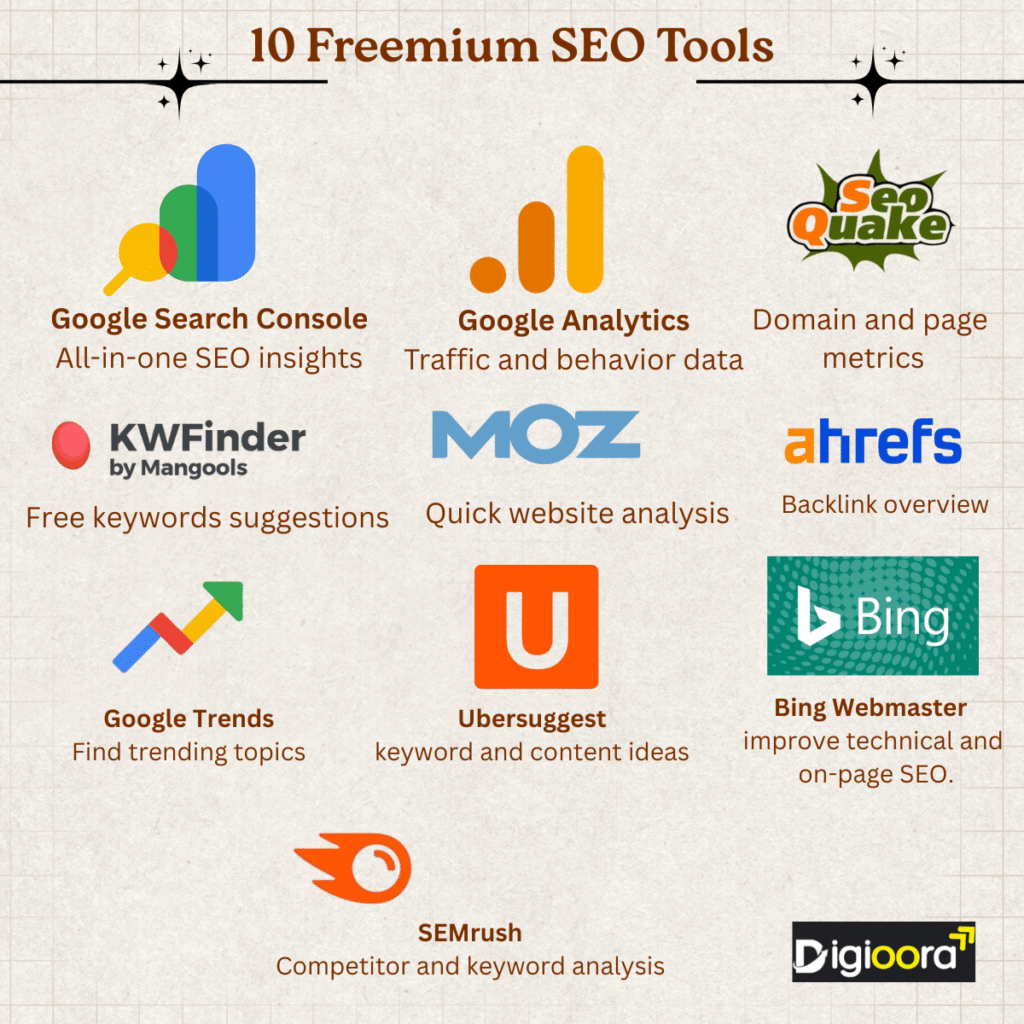
10 Freemium SEO Tools That Address the Entire SEO Process. These freemium SEO tools work together to support all key elements of SEO On-Page and Off-Page optimization, making them incredibly useful for students, marketers, and professionals alike. Google Search Console and Bing Webmaster Tools help monitor indexing, crawling, and technical SEO performance directly from the search engines, while Google Analytics provides in-depth insights into website traffic, user behavior, and conversions. For keyword research and content planning, tools like KWFinder , Ubersuggest, SEMrush, and Google Trends help uncover search volume, keyword difficulty, trending topics, and competitor opportunities. Moz and SEOquake facilitate quick website analysis by providing domain authority metrics and on-page SEO evaluations, while Ahrefs enhances off-page SEO efforts through backlink and link profile analysis. Altogether, these tools form a robust, cost-effective SEO toolkit which enhances visibility, boosts rankings, and optimizes overall website performance by employing a balanced strategy for both SEO on-page and off-page.